The alert said an account had visited the blog twelve times this week. The SDR called. It turned out to be one person researching a job application.
That same week, a CFO at a different account viewed the pricing page once, then read the security documentation. Nobody followed up, because it was only two visits.
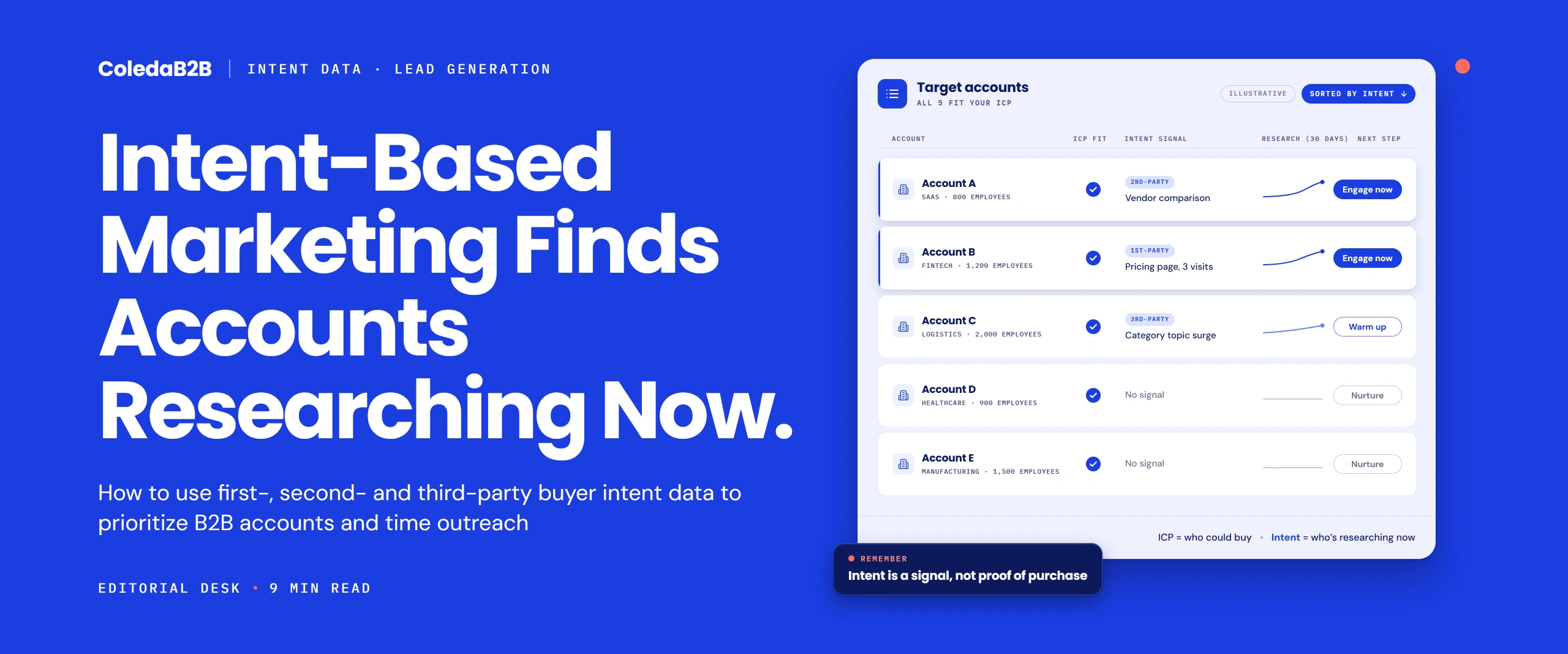
Most teams don’t have a signal shortage. They have a sorting problem. This field guide to B2B buying signals shows which ones deserve action, which ones mislead, and how long each one stays useful.
What Makes a Signal Worth Acting On
A buying signal is evidence that an account is more likely to buy soon than it was before. Volume alone doesn’t make something a signal. Three questions do:
| Question | Weak answer | Strong answer |
|---|---|---|
| Who did it? | Unknown visitor or a junior role | A decision-maker, or several roles from one account |
| What did they do? | Read a general blog post | Viewed pricing, security, or integration details |
| When did it happen? | Weeks ago | In the last few days |
A signal that scores strong on all three deserves a response within a day or two. A signal that scores weak on all three is just noise.
The B2B Buying Signals Worth Watching
Strong Signals: Act Within 48 Hours
| Signal | Why it matters | Where to find it |
|---|---|---|
| Several people from one account visit in a short window | A buying group is forming | Website visitor data |
| Pricing page views, especially by senior roles | Budget conversations have started | First-party analytics |
| Visits to security, compliance, or trust pages | Security review is coming, a late-stage step covered in our piece on CISO buying decisions | First-party analytics |
| Integration or technical documentation views | A technical evaluator is checking fit | Docs analytics |
| Detailed questions about AI features | Buyers are validating a shortlist | Sales conversations, chat |
| Comparison views on review sites | You’re being weighed against named competitors | Review site intent data |
The AI question deserves special attention. 6sense’s 2025 research found that 89% of purchases included AI features. Also, 58% of buyers contacted sellers earlier specifically to clarify missing AI details. When a buyer asks detailed AI questions, they’re often already comparing finalists.
Review sites matter just as much. G2’s 2024 Buyer Behavior Report found that 31% of software buyers named review sites as their most consulted source.
Moderate Signals: Research and Nurture
| Signal | Why it matters | Where to find it |
|---|---|---|
| Third-party topic surge on your category | The account is researching, maybe not you yet | Third-party intent data |
| Branded search growth | People are looking for you by name | Search console, ad platforms |
| A new executive in a relevant role | New leaders often review tools and vendors | LinkedIn, news |
| Job postings that mention your category | The company is investing in the problem you solve | Job boards |
| A former customer champion joins a new company | A warm path into a new account | LinkedIn, CRM alerts |
| Funding round or expansion news | New budget may be available | News, press releases |
These signals rarely justify a sales call alone. They do justify research, targeted ads, and relevant content. For the trade-offs between these sources, see our comparison of first-party vs third-party intent data.
Context Signals: Useful Background Only
- A single blog visit
- A newsletter signup
- An event registration without attendance
- Social media follows
These add color to an account’s profile. On their own, they don’t predict a purchase.
Signals That Look Strong but Aren’t
Some activity looks like buying behavior but usually isn’t. Filter these out before they reach sales:
- Job seekers researching your company before an interview
- Students and researchers reading deeply on a topic
- Competitors checking your pricing and messaging
- Existing customers using help content for support
- Partners and agencies doing work on your behalf
- Bots and crawlers inflating visit counts
One person reading twenty blog posts is almost never a buying group. It’s usually one of the people above.
Combinations Beat Single Signals
Individual signals mislead. Patterns rarely do. Here are three combinations that almost always deserve attention:
| Combination | What it usually means |
|---|---|
| Third-party surge, then several new visitors from the same account | Research has moved from general to specific, and you’re on the list |
| Pricing views plus security page visits | The account is preparing a business case and a risk review |
| New executive, then branded search from that company | A new leader is reviewing options, and someone mentioned you |
This is why signals work best in a combined account engagement score. A single score weighs every signal together, so no one data point drives the decision.
How Long a Signal Stays Useful
Signals lose value quickly. As a rule of thumb:
| Signal type | Useful for about |
|---|---|
| Pricing, security, or demo-related activity | 1–2 weeks |
| Multi-person website visits | 2–3 weeks |
| Third-party topic surges | 3–4 weeks |
| Executive changes and funding news | 60–90 days |
| Job postings | Until the role is filled |
Build decay into your scoring. A pricing visit from six weeks ago shouldn’t count the same as one from yesterday.
Some Signals Never Reach Your Tools
Not every signal is trackable. Buyers increasingly research inside AI tools, private communities, and peer conversations, as covered in our piece on the dark funnel.
So listen for signals in conversations too. Sales calls, support tickets, and partner feedback often surface buying intent that no dashboard captures.
Signals Inside Your Customer Base
Buying signals aren’t only for new business. Existing customers show them too, when a new department researches your category or a team’s usage suddenly grows. Those are expansion opportunities, and they’re the focus of our guide to B2B cross-sell campaigns.
The Short Version
A buying signal is only as good as the person behind it, the action they took, and how recently it happened. Act fast on the strong ones, nurture the moderate ones, and filter out the noise before it wastes a seller’s week. For the bigger picture, start with our guide to intent-based marketing.
Drowning in signals but short on pipeline?
ColedaB2B helps B2B teams sort real buying signals from noise and route them to the right owner at the right time. Talk to us about your signal strategy.
FAQs:
B2B buying signals are actions or events that show an account is more likely to buy soon, such as pricing page visits, several people from one company researching, or a new executive in a relevant role.
The strongest signals include multiple visitors from one account, pricing and security page views by senior roles, technical documentation reads, detailed questions about AI features, and comparison views on review sites.
Act on strong signals within 48 hours. Most late-stage signals, such as pricing or security page activity, lose much of their value within one to two weeks.
Job seekers, students, competitors, existing customers using support content, partners, and bots can all create activity that looks like interest but rarely leads to a purchase.
Usually not. Combinations of signals, such as a topic surge followed by several new visitors from the same account, are far more reliable than any single signal.